


How to Choose a Safe Rabbit Hideout
What makes a rabbit hideout actually work: shelter, entrance size, multiple exits, cardboard, wood, fabric, structural stability and how much space it takes up.
Rabbits living indoors usually settle on a few places they like to retreat to.
Some spend time under a desk, some choose the edge of a bed, and some keep returning to a cardboard box even when the room is already quiet. A hideout is not there to make a rabbit stay inside. It simply gives the rabbit somewhere to withdraw to when it wants a little cover.
A rabbit may not use that space for hours at a time. It may step inside, turn around and leave again. A sudden noise or unfamiliar activity can also send it straight back. The important part is that a sheltered option is there when the rabbit wants it.
A useful hideout is rarely the one that looks most like a tiny house. It is the one a rabbit can enter, turn around in, rest inside and leave without the structure becoming another problem in the room.
A hideout needs cover without becoming a cramped box
A rabbit wanting somewhere to hide does not necessarily need a fully enclosed wooden house.
The space under a low platform, a tunnel, a cardboard box or another partly covered area can all provide the same basic feeling of shelter.
What changes the space is the cover around the rabbit. A spot with a roof and some enclosed sides feels very different from an open cushion sitting in the middle of the room.
That does not mean the inside should be deliberately dark or narrow.
The rabbit still needs to enter naturally, turn around and change position. A miniature house can look perfectly sized in a product photo while leaving the rabbit with little room to do more than sit upright.
An entrance that is just big enough to squeeze through may still be too awkward
Many hideouts use a small doorway because it makes the structure feel more den-like.
Some enclosure around the entrance can be useful, but there is little benefit in making the rabbit squeeze through every time.
The rabbit's whole body has to pass through the opening, not just the head and shoulders. A fluffy or larger rabbit can look as though it should fit and still move through the doorway awkwardly.
The inside matters in the same way.
Rabbits turn around, lie down, change direction and sometimes try to share the same hideout. A box that is only slightly larger than one sitting rabbit can feel much tighter in normal use than it does in a photograph.
There is no single entrance measurement that works for every rabbit. Watching how naturally the rabbit enters, leaves and settles inside is usually more useful than treating one number as universal.
With two rabbits, the way out matters more
A large single entrance often works perfectly well for one rabbit.
With two rabbits, the same structure can feel different.
If a closed hideout has only one narrow doorway and one rabbit sits near it, the rabbit inside has no other route out. Even bonded rabbits sometimes want to pass one another, enter at the same time, or leave in opposite directions.
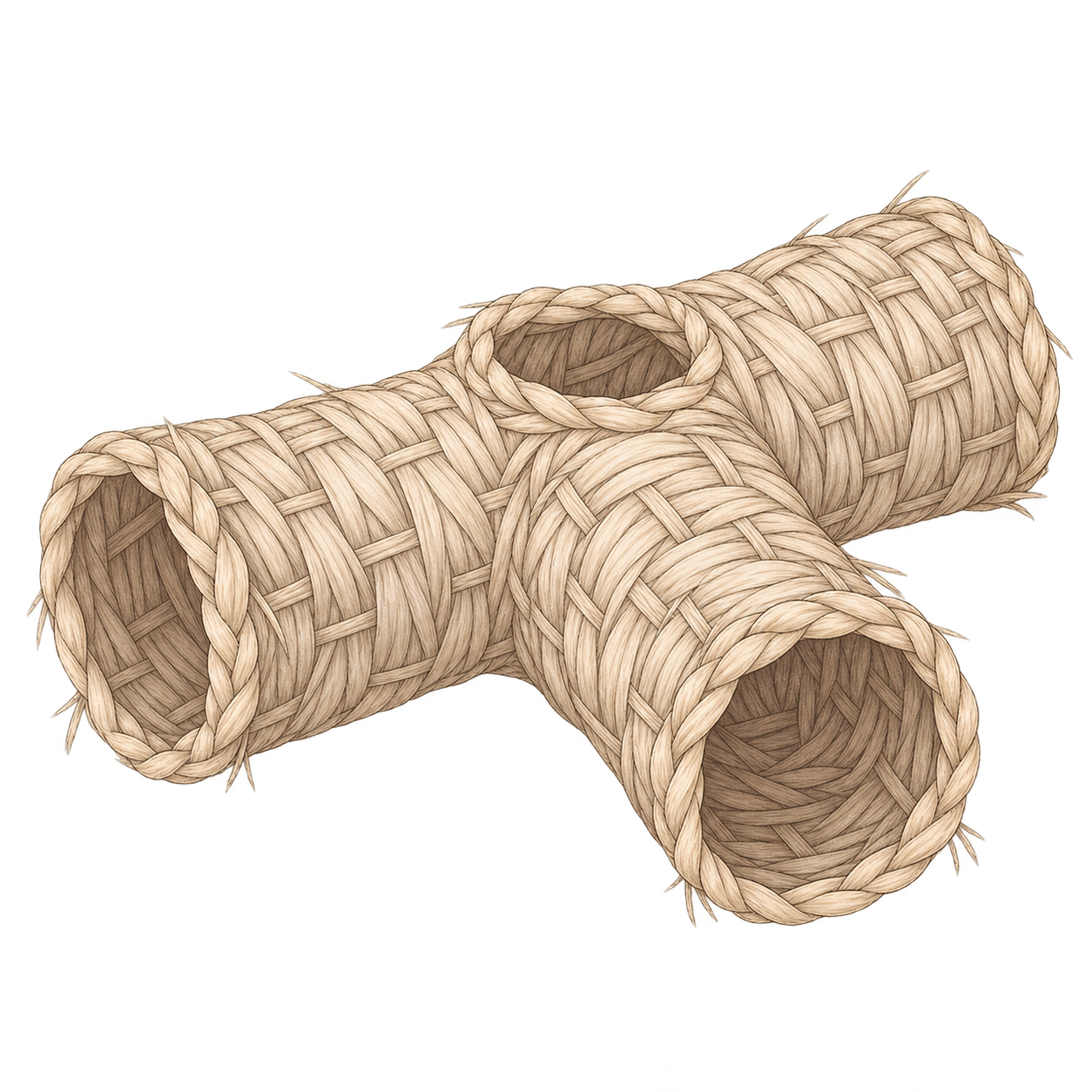
That is why shared rabbit spaces often use boxes with openings on more than one side, tunnel-like shelters, or other structures that let a rabbit move out without having to pass directly through another rabbit.
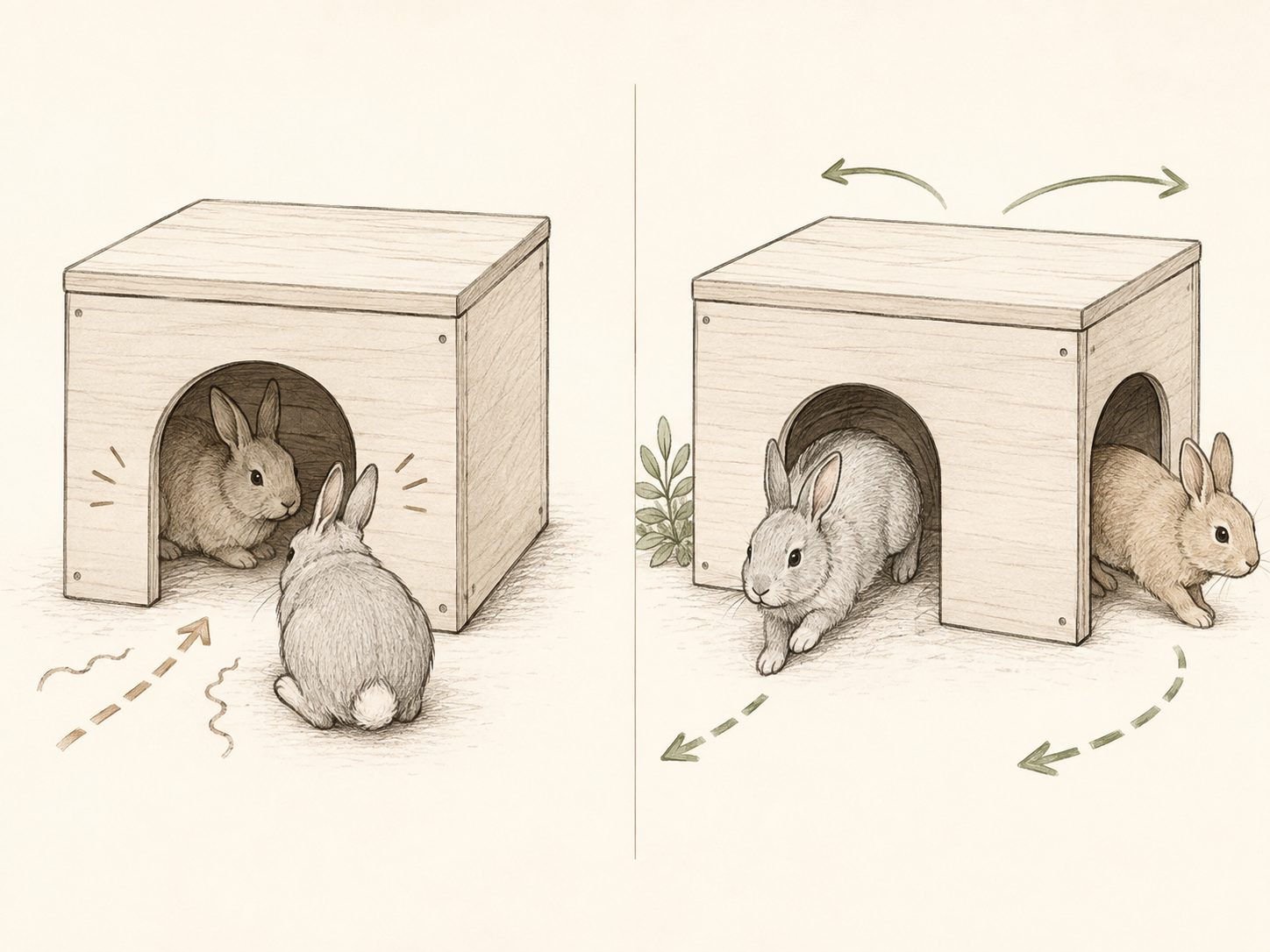
This does not mean every rabbit shelter needs two identical doors. A very broad, open entrance is not the same as a narrow hole, and a single rabbit does not have the same shared-space problem.
In a multi-rabbit home, a hideout works better when it does not become a small dead end that one rabbit can control simply by sitting at the entrance.
Cardboard boxes are useful, but chewing them is not the same as eating them freely
A cardboard box may look temporary beside a wooden rabbit house, but it often works extremely well.
It is light, inexpensive and easy to replace. An entrance can be enlarged in a minute, the box can be moved to another part of the room, and another exit can be added if the layout is not working.
Rabbits also commonly modify cardboard themselves.
An entrance becomes wider, an edge gets torn apart, and sometimes a second opening appears after repeated chewing. Small amounts of tearing are common exploratory behaviour.
There is still an important difference between chewing cardboard and repeatedly swallowing a lot of it.
Cardboard is not something a rabbit should be consuming in quantity. If a rabbit continually shreds a box and is clearly swallowing substantial pieces rather than simply tearing and dropping them, the box is no longer a good long-term chewable shelter.
Delivery boxes also bring extra materials with them. Large strips of tape, plastic film, labels with plastic coatings, staples and other packaging parts are better removed before the box becomes rabbit furniture. What remains should be plain, clean cardboard in sound condition.
Once a box has become soft, partially collapsed, or chewed deeply enough to expose glued layers or hidden packaging material, replacing it is simple.
The main advantage of cardboard is not that a rabbit can eat as much of it as it wants. It is that the shelter can be adjusted without much effort.
If the entrance is too small, it can be enlarged. If two rabbits keep meeting at the doorway, another exit can be cut. If the rabbit ignores the box in one corner, it can be moved without redesigning the room.
Wooden hideouts last longer, but the details matter more than the word “wood”
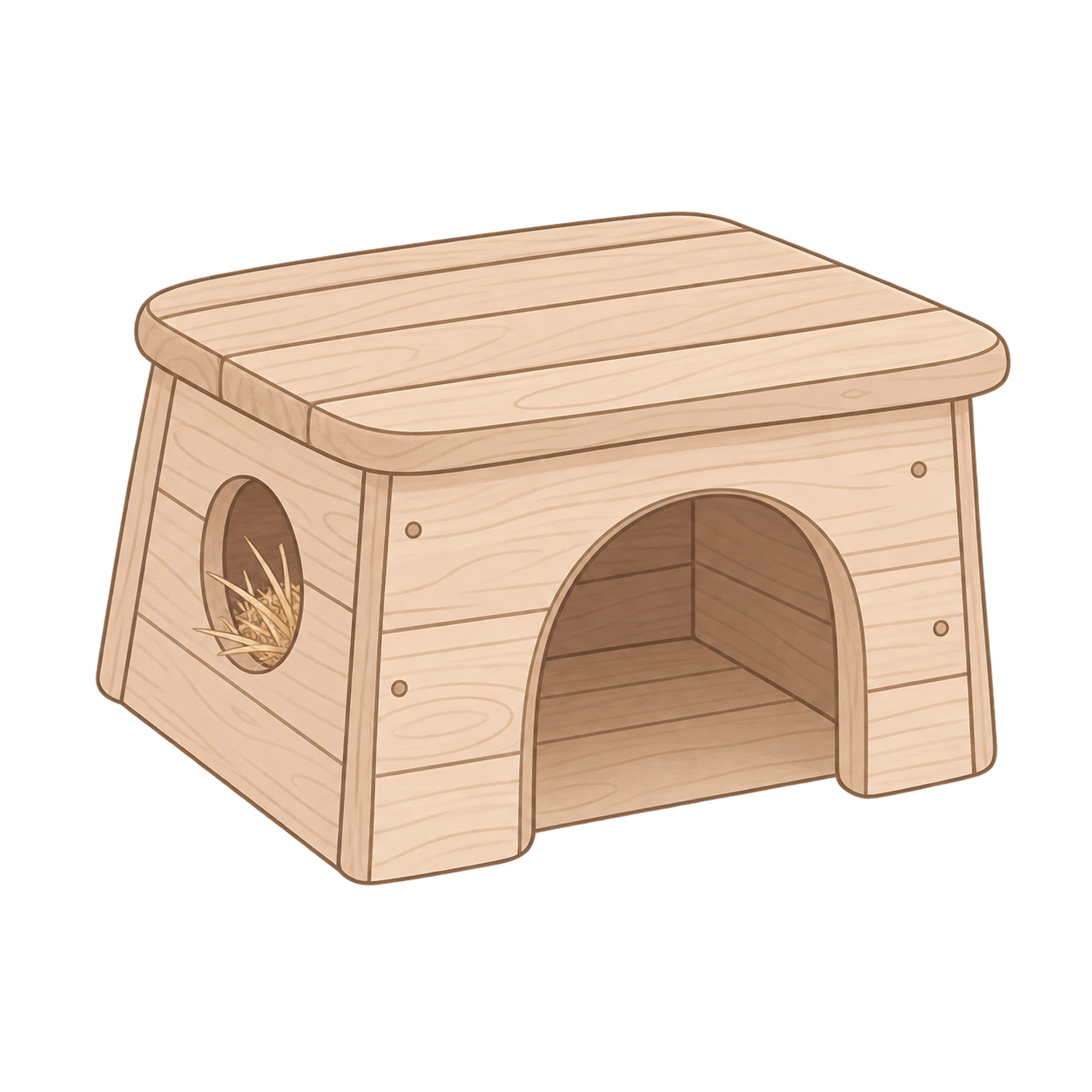
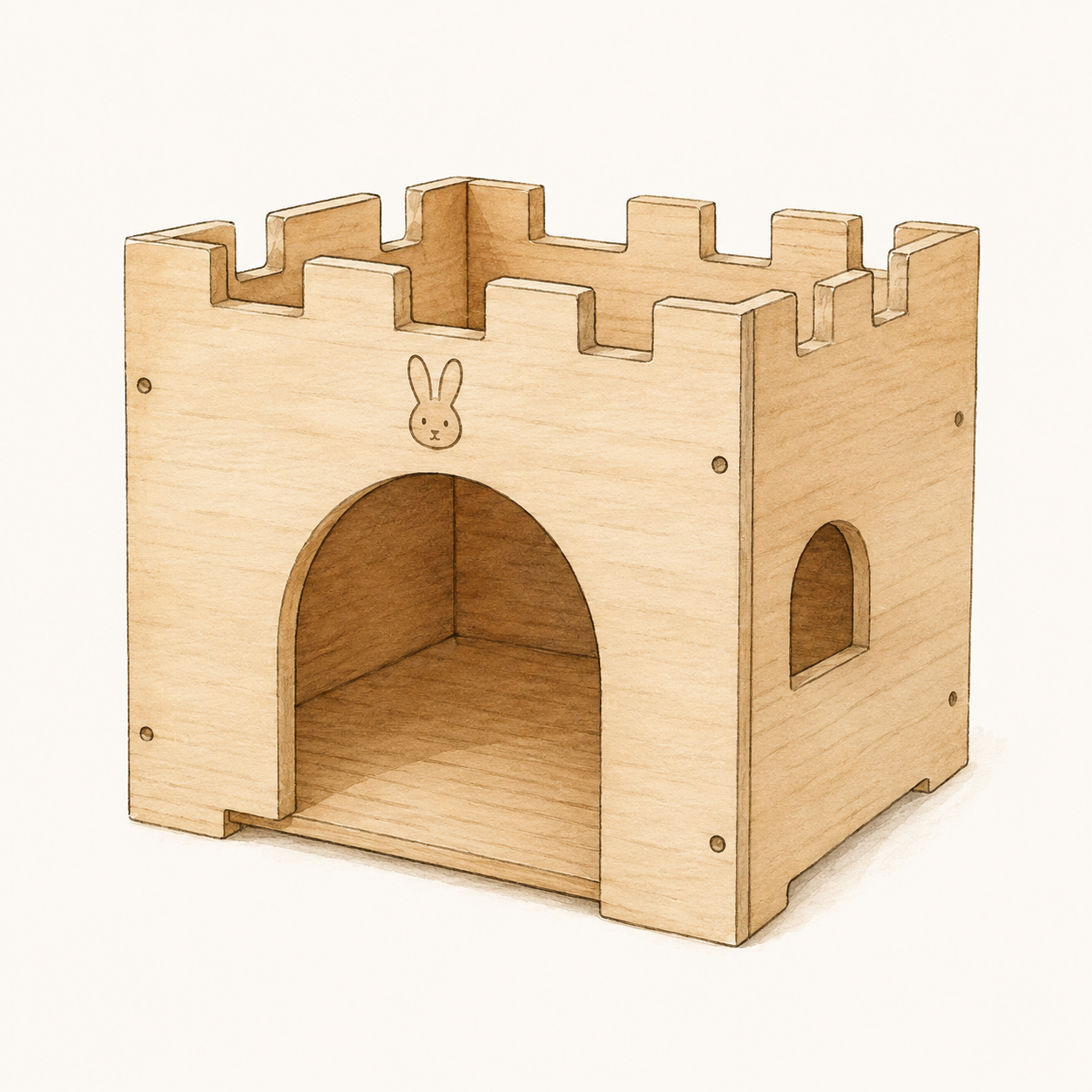
Wooden shelters are usually more stable and can stay in the room for much longer.
A flat top often becomes a platform as well. Rabbits may begin sitting on it almost immediately, which can make one simple structure serve as both a hideout and a low lookout point.
Wood itself, however, does not automatically make a finished product suitable for chewing or daily use.
The rabbit actually comes into contact with the panel edges, surface finish, joints, screws and other hardware.
A rough edge or exposed screw tip remains a problem regardless of whether the main structure is made from natural wood. Paint, varnish and other surface treatments also matter if the rabbit is able to chew them.
Small construction details change how the hideout behaves
| Construction detail | What it changes in daily use |
|---|---|
| Thin top panel with little support | More likely to flex or move when a rabbit jumps on it |
| Properly supported top | More suitable when the rabbit uses it as a low platform |
| Hardware kept inside the structure | Less likely to be reached during normal chewing and exploring |
| Exposed screws, staples or sharp edges | Creates avoidable contact points |
A simple wooden shelter with clean construction often works better than a more elaborate design with unnecessary details.
Fabric hideouts depend heavily on what the rabbit does with them
Soft beds, fabric tents and padded shelters suit some rabbits very well.
Some simply lie inside them.
Others quickly begin chewing the entrance, pulling at the lining or digging through the base. Once fabric is repeatedly opened up, loose threads, filling and internal layers become accessible.
A fabric shelter that stays intact and receives little chewing attention can function as an ordinary soft resting place.
One that is being dismantled every day becomes less practical very quickly. A plain cardboard or wooden shelter may then be much easier to live with.
The material name by itself does not settle the question. The condition of the item after the rabbit has actually used it matters much more.
A flat roof often becomes a platform whether it was intended to or not
Rabbits like to jump onto slightly raised surfaces.
If a hideout has a broad, flat roof, there is a good chance the rabbit will eventually test it.
At that point the top is part of the usable furniture rather than just a cover over the inside.
A solid wooden shelter is usually easy to understand in this respect. A light cardboard box can gradually soften and collapse, particularly after chewing. Some folding fabric houses also look as though they have a roof while never being designed to support a rabbit's weight.
Once the rabbit has turned the roof into a platform, whether the structure wobbles, tips or folds matters more than the name on the product listing.
Too many hideouts can slowly take away the space they were meant to improve
Once it is clear that rabbits benefit from shelter, it is easy to keep adding more.
A wooden house, a tunnel, a cardboard box and a soft bed can all look useful on their own.
Together, they gradually break up the open floor.
The same continuous-space issue appears here as it does elsewhere in an indoor rabbit room. A hideout gives the rabbit somewhere to retreat to; it does not need to turn the whole living area into an obstacle course.
One well-placed box and a tunnel may already provide enough shelter in a simple room. With two rabbits, having separate resting options can be useful so they are not forced to share the same enclosed spot all the time.
The number of shelters is less important than whether the rabbits have somewhere to withdraw without losing most of their movement space.
Placement changes how much a hideout gets used
The same box can be used very differently in the middle of a room and beside a wall.
Rabbits naturally spend a lot of time near boundaries. A shelter beside a wall or piece of furniture, especially in a quieter part of the room, often feels more protected than the same object sitting completely exposed on all sides.
A hideout directly beside constant foot traffic may only get occasional use. Move it somewhere calmer and it can become a regular sleeping place.
It still does not need to disappear into the hardest corner to reach.
Hay, fur and cardboard fragments accumulate inside. The space needs to remain easy enough to clean, and it helps to be able to see roughly where the rabbit is.
The most useful position is often quite ordinary: a little sheltered, outside the main running route, and not so hidden that it becomes another inaccessible under-bed space.
Rabbits usually make their preferences clearer than product descriptions do
A carefully designed rabbit house can sit unused while the delivery box beside it becomes occupied by the next day.
The rabbit has no reason to care which one cost more.
It responds to the entrance, the room inside, the location, how easily it can leave, and whether the structure stays comfortable and stable as it is used.
There is little need to make the first hideout complicated.
A simple, stable shelter with enough room is usually enough to reveal what the rabbit actually prefers. A more durable wooden house, another tunnel or a separate resting place for a second rabbit can be added later if the room needs it.
Most settled indoor spaces do not end up needing a large collection of shelters.
If the rabbit chooses to use it, has enough room inside, can leave easily, and the structure stays safe as it is chewed and jumped on without taking over the whole room, the hideout is already doing its job well.