


How to Rabbit-Proof a Bedroom
A practical look at rabbit-proofing a bedroom: cords, under-bed spaces, narrow gaps, baseboards, carpets, fabrics, plants and the way a room changes once a rabbit actually starts using it.
Once a rabbit starts using a bedroom as part of its normal living space, a lot of ordinary things begin to look different.
A charging cable hanging beside the bed barely registers to a person. The narrow gap between a cabinet and the wall may not feel like part of the room at all. But rabbits live much closer to the floor. They tend to follow edges, investigate covered spaces and test protruding surfaces with their teeth, so the room they experience is not quite the room we see.
A tidy room is not automatically a rabbit-safe room. What matters is what the rabbit can reach, squeeze into and become interested in over time.
Rabbit-proofing does not have to mean wrapping or blocking every surface. In many homes, only a few places ever become persistent trouble spots. Once the rabbit has lived in the room for a while, those places usually become obvious.
Cords are not only a problem when a rabbit is known to chew them
The difficult thing about electrical cords is that it is hard to predict which one a rabbit will notice.
Some rabbits go straight for a charging cable lying on the floor. Others ignore most cords but repeatedly find the short section hidden behind a bedside table. A cord that hangs down, crosses a usual route or disappears into a sheltered area may become interesting even when other cables are left alone.
Electrical cords are also different from ordinary furniture. A few tooth marks on a table leg are mostly a damage problem. Once the outer layer of a live cable is broken, the danger is much more serious.
Putting a sleeve around a cable can add another layer, but it does not make the cable disappear. If the rabbit can still reach it, the result may simply be a rabbit chewing the sleeve instead.
| Approach | What it changes |
|---|---|
| Adding only a soft outer cover | The cord is still reachable, and the cover itself may become chewable |
| Raising, hiding or physically separating the cord | The rabbit no longer has direct access to it |
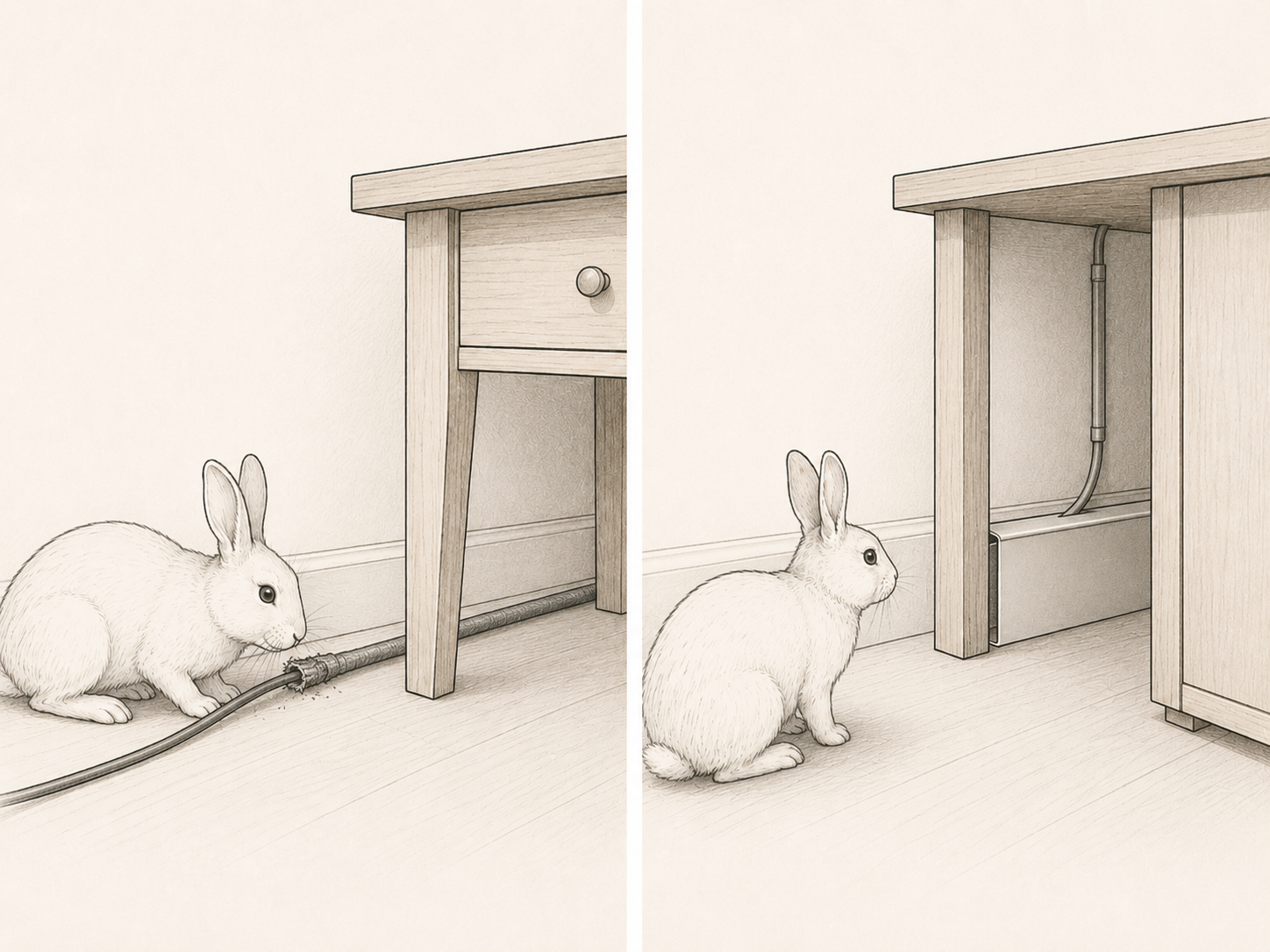
That is why indoor setups often become simpler once cables are routed behind furniture, lifted along the back of a desk, collected inside a closed cable box or kept behind a barrier.
It also avoids turning the whole room into a network of thick plastic tubes.
Under the bed is often more complicated than it looks
Rabbits often like the space under a bed.
It is low, dark and sheltered, which makes it naturally appealing. A rabbit entering a new bedroom may circle the bed a few times and then disappear underneath.
If the whole area is open, clean and easy to see, that is not automatically a problem.
The difficulty is usually farther inside.
Many bed frames have fabric panels, support bars, screws, cables or narrow spaces that connect to the headboard and wall. Some rabbits do not simply settle under the bed. They keep exploring until they find a deeper layer of the frame.
Those are places people rarely inspect.
Some households eventually block the entire underside of the bed for this reason. It is not because rabbits should never hide under furniture. It is because a hidden frame cavity is difficult to control once a rabbit starts chewing fabric or pushing farther into it.
On the other hand, a genuinely open, flat and hazard-free under-bed area can sometimes work perfectly well as a resting place.
The answer depends much more on the structure than on the fact that it is “under a bed.”
Rabbits often notice narrow furniture gaps that people barely see
A few centimetres between a cabinet and a wall may feel like no space at all.
A rabbit may see it immediately.
Rabbits often travel along edges, nosing around the boundary of furniture and walls. Once they find that a gap continues inward, they may keep trying to squeeze through it.
Sometimes they simply go in and back out. In other cases, the gap narrows farther inside and there is barely enough room to reverse.
The awkward ones are usually the gaps people cannot see into: behind a bedside cabinet where cables are also stored, or beside a wardrobe where brackets and hardware sit deeper inside.
This is why long-term rabbit rooms often end up with a few very small, almost invisible barriers.
They are not there to fence the rabbit in. They simply close off spaces that offer very little benefit and a lot of uncertainty.
Baseboards and corners often become very specific habits
Not every rabbit chews baseboards.
That matters, because covering every wall before the rabbit has even used the room can create a lot of unnecessary work.
Chewing preferences are often surprisingly specific.
One rabbit may keep returning to the bottom of a door frame. Another may only work on one corner beside the bed. A rabbit that ignores the baseboards in one room may become fascinated by a particular edge in another.
These places often have one thing in common: they have a clear edge.
A baseboard projects slightly from the wall. A door frame turns a corner. A wooden furniture edge gives the front teeth something easy to test. A few casual bites can eventually turn into a repeated habit.
For that reason, wall protection does not always need to cover the whole room from day one. Once a particular spot starts collecting fresh tooth marks, protecting that section alone can be enough.
The protective material matters too. If a hard wooden edge is replaced by exposed foam or a soft strip, the new material may simply be easier to dismantle.
A lot of successful rabbit-proofing is not about adding another layer everywhere.
It is about making the few problem areas difficult to reach or unrewarding to chew.
Carpet damage often starts at one small edge
Rabbits do not necessarily begin by digging a hole in the middle of a carpet.
A flat, stable rug may be ignored for months. Then one corner curls upward or one loose thread appears, and suddenly the same rabbit starts returning to that place.
Rabbits are often interested in things that can be pulled farther.
A loose thread becomes longer. Once an edge lifts, another layer appears underneath. That gives the rabbit something new to pull, dig or chew.
So what looks like a rabbit suddenly becoming destructive may have started with one small accessible edge.
This is not exactly the same question as choosing a durable floor. Indoor flooring also affects traction, cleaning and how much of a room the rabbit is willing to use. For rabbit-proofing alone, a surface that stays flat and does not expose an easy starting point is usually much easier to live with.
Hanging fabric gradually becomes part of the rabbit's world
Bed sheets, duvet covers and curtains are easy to overlook.
But if fabric hangs close to the floor, it has entered the rabbit's reach.
Some rabbits only leave a few holes. Others slowly drag a sheet toward the underside of the bed. Curtains can be even more interesting because the fabric moves when it is pulled.
Damage to the fabric itself is one issue.
The more important question is whether the rabbit is actually swallowing threads, torn fabric or filling. Loose fibres are not something that should remain available for repeated chewing.
In practice, these problems are often solved by shortening, lifting or securing the fabric rather than trying to teach the rabbit to ignore it.
The room usually looks tidier afterward too.
Something being “off the floor” does not necessarily make it unreachable
Rabbits do not always stay on the ground.
Beds, low cabinets, boxes and steps can all become launch points.
Something may look safely elevated when viewed from the floor, but if the bed is beside it, it may suddenly be within nose range.
Plants are a common example.
A pot may be high on a table, while leaves hang lower or fall onto the floor. If the rabbit can also jump onto nearby furniture, the real distance becomes even smaller.
Medicines, cleaning products and small plastic objects follow the same logic.
Reachability depends not only on height, but on whether the furniture around an object creates a route to it.
Small objects on the floor cause a surprising amount of trouble
The easiest things to miss in a bedroom are often not the large pieces of furniture.
A hair tie under the bed, a piece of plastic packaging, a drawstring, a data cable or a scrap of tape can all be discovered by a rabbit long before a person notices them.
They are easy to forget because they are small.
But rabbits naturally investigate with their noses and mouths.
Poor candidates for “wait and see”
- exposed electrical cables and power strips;
- medicines, cleaning products and small swallowable objects;
- narrow spaces with hidden or uncertain internal structures;
- plants whose safety around rabbits is uncertain.
Once those are out of the way, many of the less serious issues can be learned from the rabbit's actual behaviour.
The room does not need to turn into a maze of barriers
Rabbit-proofing can easily expand until every surface seems to need protection.
The bed is blocked, then a gap beside a cabinet looks suspicious, then the baseboards are covered, then the furniture legs begin to look vulnerable.
In reality, many rabbits have only a small number of persistent problem spots.
After some time, the room may need protection around one cable route, one or two corners, the underside of the bed and a rug edge the rabbit keeps lifting. Everything else may be ignored.
A mature setup can therefore look simpler than the first attempt.
Hazards are gone, a few inaccessible gaps are closed, repeated chewing points are protected, and the rest of the bedroom still looks like a normal room.
Rabbits also need things they are allowed to investigate
Chewing, digging and squeezing into sheltered spaces are not signs that the room has failed.
They are ordinary rabbit behaviours.
If everything in the bedroom is something the rabbit must not touch, the rabbit will still look for something to do.
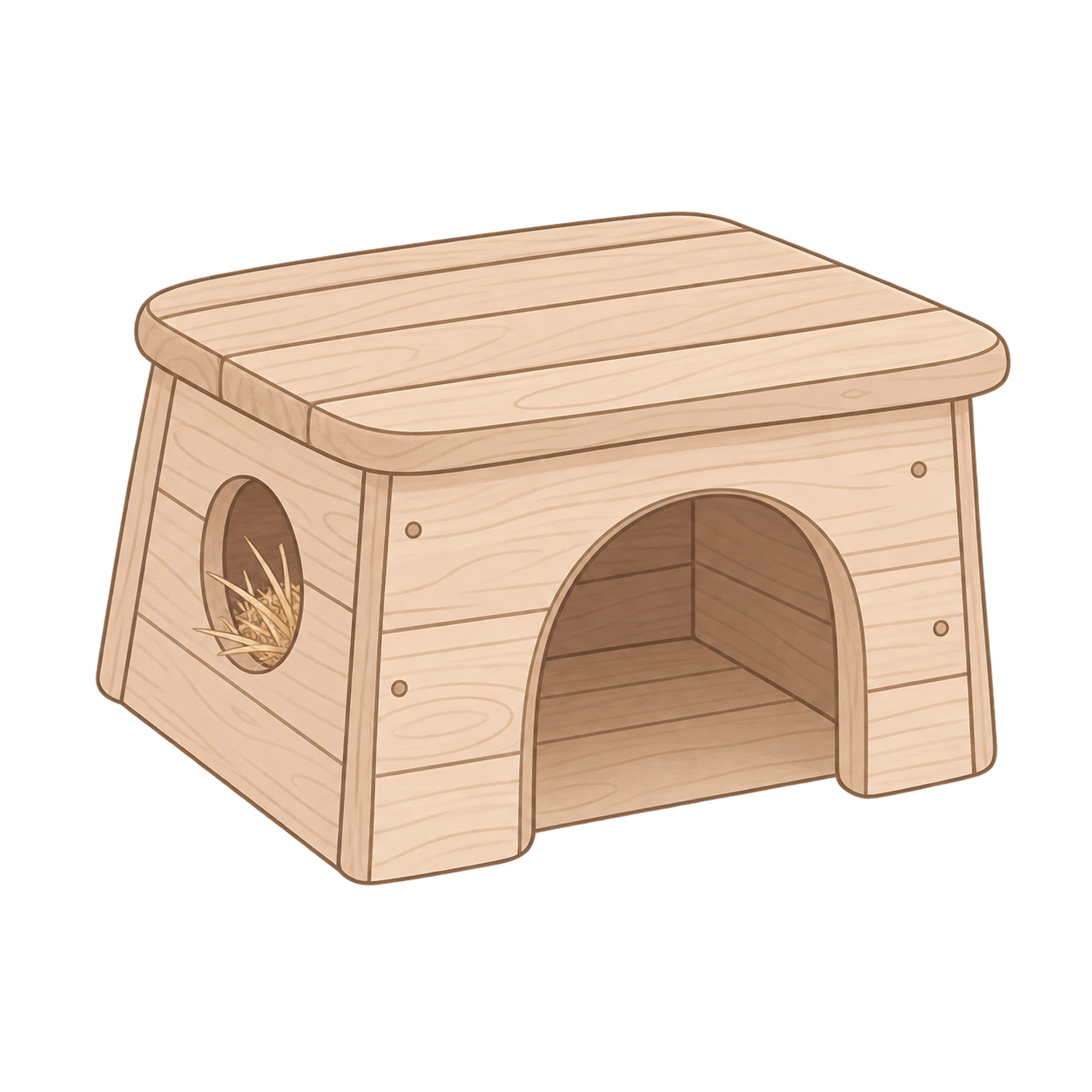
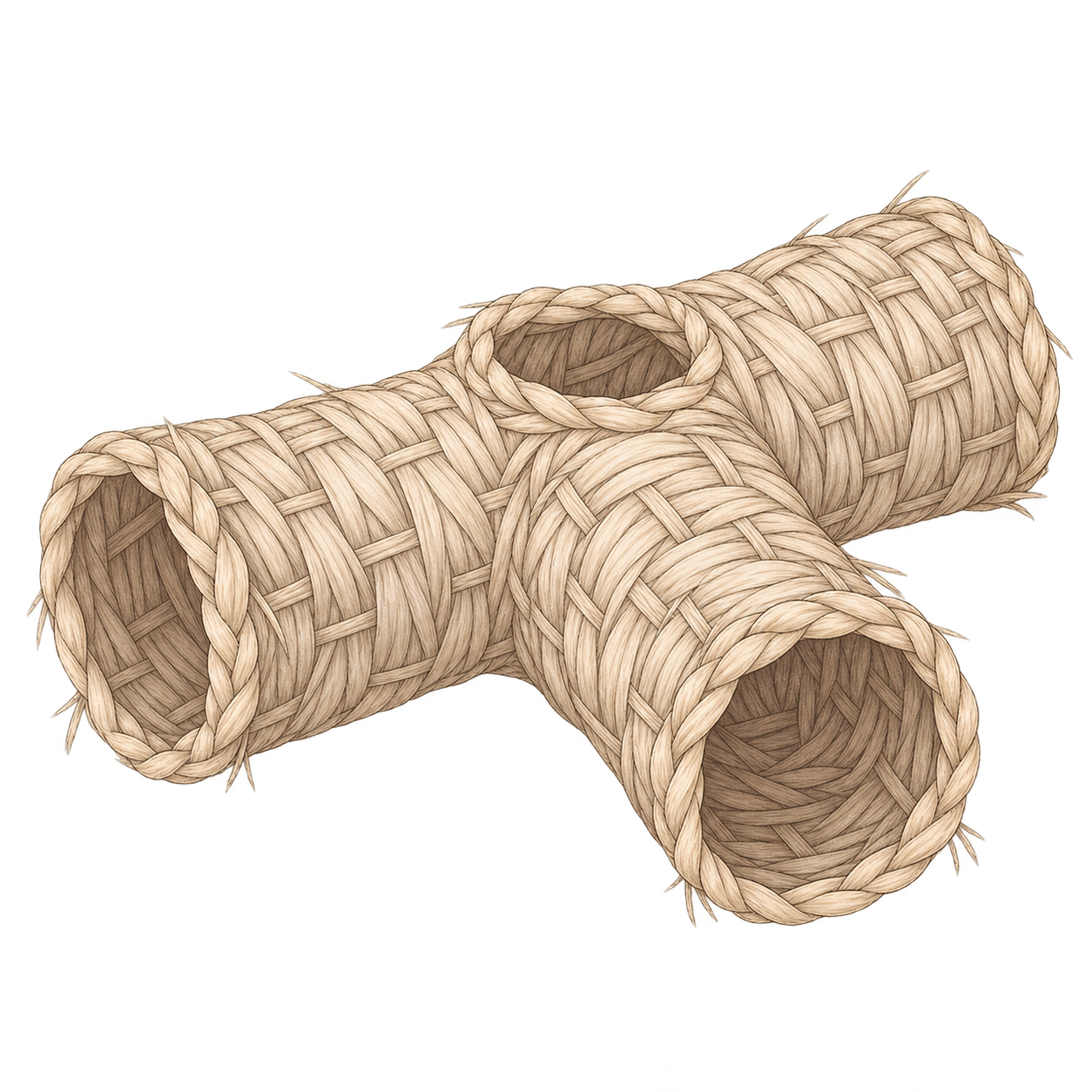
Cardboard, rabbit-appropriate chew materials, tunnels and simple foraging or digging activities give some of that behaviour somewhere more suitable to go.
That does not guarantee that a rabbit with a favourite baseboard will suddenly forget it.
It simply means the room contains more than a collection of forbidden objects.
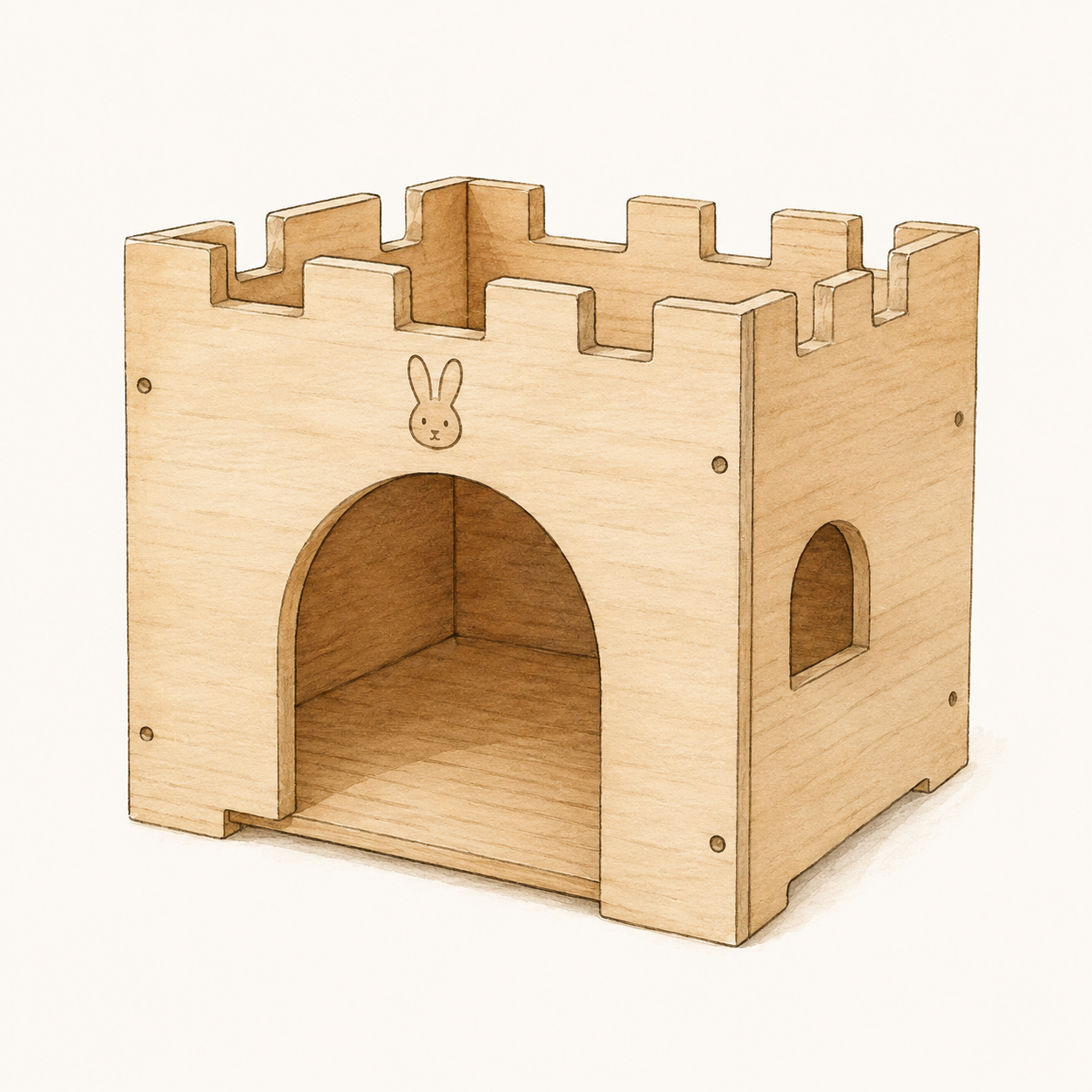
A comfortable long-term rabbit space usually has both: places the rabbit cannot access, and other things that are deliberately available for chewing, hiding and exploring.
Rabbit-proofing changes as the rabbit changes
It is difficult to predict every problem on the first day.
Some rabbits spend their first weeks simply learning the room and only later become interested in one particular corner. A place that used to be unreachable may become reachable after a box or stool is moved nearby.
Furniture changes can change rabbit routes as well.
Rabbit-proofing is therefore rarely a one-time project.
The obvious hazards are handled first. Once the rabbit is actually living in the room, the rest becomes easier to understand: where it likes to rest, which edges it follows, what it repeatedly chews and which hiding places it chooses.
The final arrangement usually does not need to be complicated.
The rabbit can move normally, the dangerous things stay out of reach, and the bedroom still feels like a normal living space.